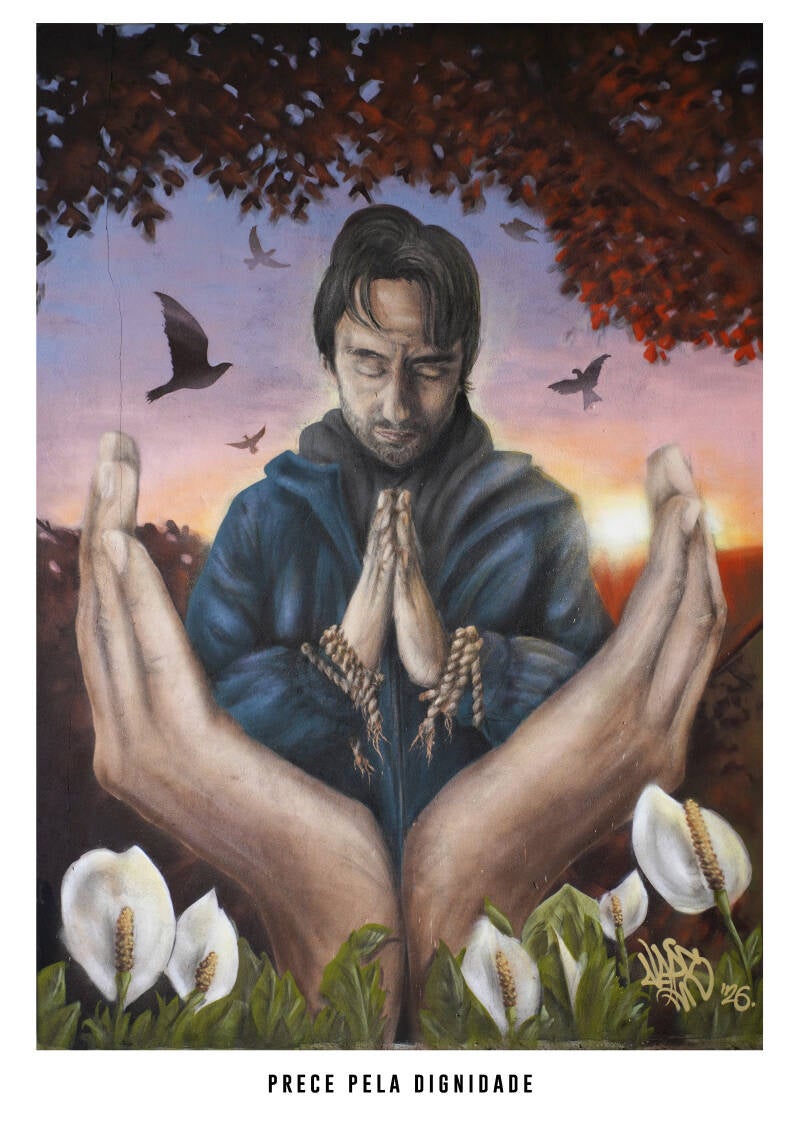
The artwork “Prayer for Dignity,” by the artist Naps, depicting the humanitarian and activist José Tiago Sousa, stood out as one of the most remarkable entries in the Amnesty International Portugal Illustration Competition, the results of which were recently announced.
Despite not winning an award, the illustration left a significant impression due to its symbolic weight and the way it intertwines art and humanity. In a reflection made public after the announcement of the results, José Tiago Sousa did not hide the impact of the work:
“It is one of the truest and most courageous artistic expressions I have had the privilege of witnessing.”
The activist made a point of beginning by acknowledging the merit of all participants, underlining the courage that underlies any artistic creation shared with the public. “Participating is, in itself, an act of courage,” he said, also congratulating the winners for their work.
In the artwork, Naps portrays José Tiago Sousa in a moment of prayer—a simple image, yet laden with meaning. Amidst light, silence, and contemplation, the illustration proposes a more intimate look at the human condition and connects the spiritual dimension to the universal values of human rights.
For José Tiago Sousa, it is precisely this choice that opens space for a broader reflection:
“It’s important to question whether these spaces are truly open to all forms of expression, including the spiritual.”
The activist suggests the importance of a more inclusive debate about the role of art in representing human diversity, including the dimension of faith. In his perspective, the work also asserts itself as a gesture of artistic courage by bringing this dimension to a context where it rarely gains visibility.
The recognition of the artist comes clearly at the end of his message:
“There are works that transcend the competitive context and find their value in the way they challenge those who see them.”