Justice for Tiago: When One Story Challenges the Whole System!
“Justice for Tiago” is a human rights movement that emerged from personal experience but has since grown into a wider platform for advocacy, awareness, and reflection. At its core, the campaign seeks to highlight issues of dignity, institutional accountability, and the lived realities that often remain unheard within formal human rights discourse.
Rather than limiting itself to traditional forms of activism, “Justice for Tiago” intentionally brings together multiple dimensions — public testimony, civic engagement, and artistic expression — as a way of reaching people on both an intellectual and emotional level. It is grounded in the belief that human rights are not only defended through legal frameworks or policy, but also through the stories we tell, the images we create, and the spaces we open for dialogue.
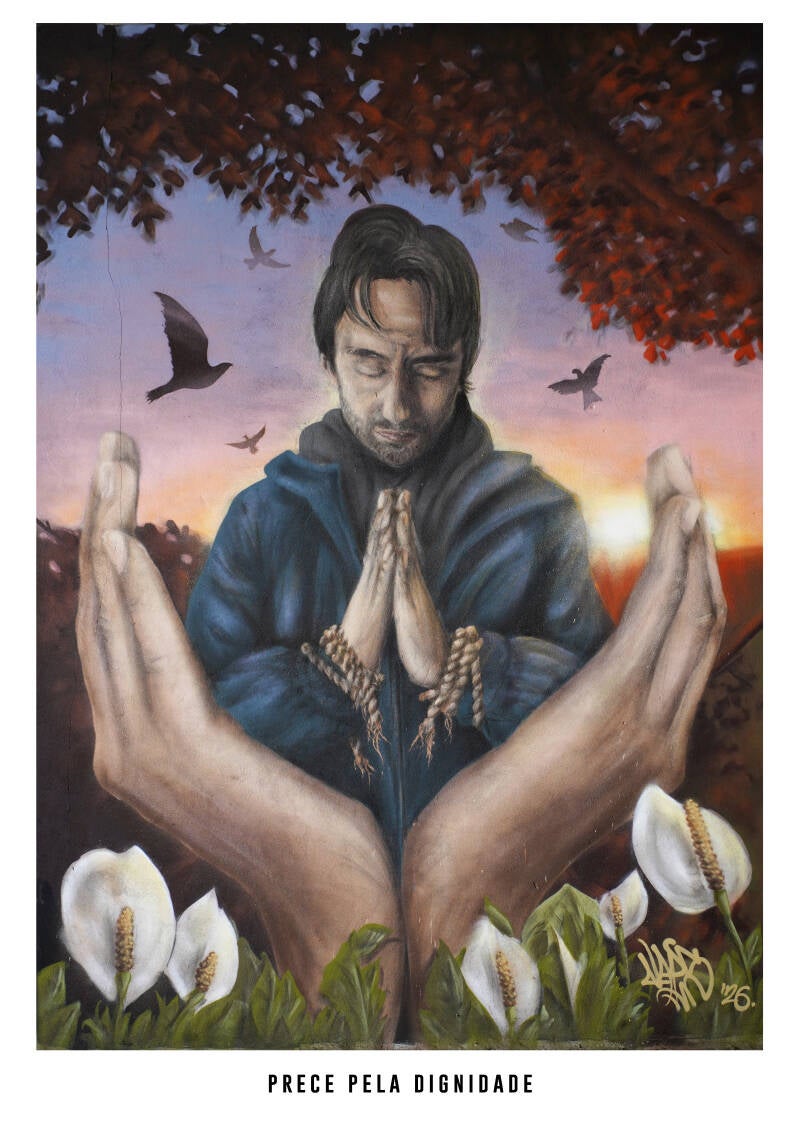
Within this context, the illustration “Prece pela Dignidade” becomes more than an individual artwork. It stands as a symbolic extension of the campaign itself — capturing a moment of vulnerability, introspection, and quiet resistance. By portraying José Tiago Sousa in prayer, the piece introduces a dimension that is often overlooked in contemporary activism: the role of spirituality and inner life as part of the human rights experience.
For José Tiago Sousa, this campaign is as much about collective awareness as it is about personal justice. As he has emphasised, its purpose is “not only to seek justice in a formal sense, but to create space for empathy, reflection, and recognition of our shared humanity.” In that sense, each initiative within the campaign — including this artistic collaboration — contributes to a broader effort to humanise the conversation around rights, moving it beyond abstraction and into lived, felt experience.
“Justice for Tiago” is an open and evolving platform, inviting participation, dialogue, and critical thought. It challenges institutions and individuals alike to look beyond surface narratives and to engage more deeply with what dignity, justice, and human rights truly mean in practice.